
PETG marble and PLA marble: stone-like finish straight off the printer
Marble filaments (PETG marble and PLA marble) mix a base polymer with mineral additives and pigments to create natural marble veining. Their biggest advantage: the veining visually hides the classic FDM layer lines — the part looks finished the moment it comes off the printer.
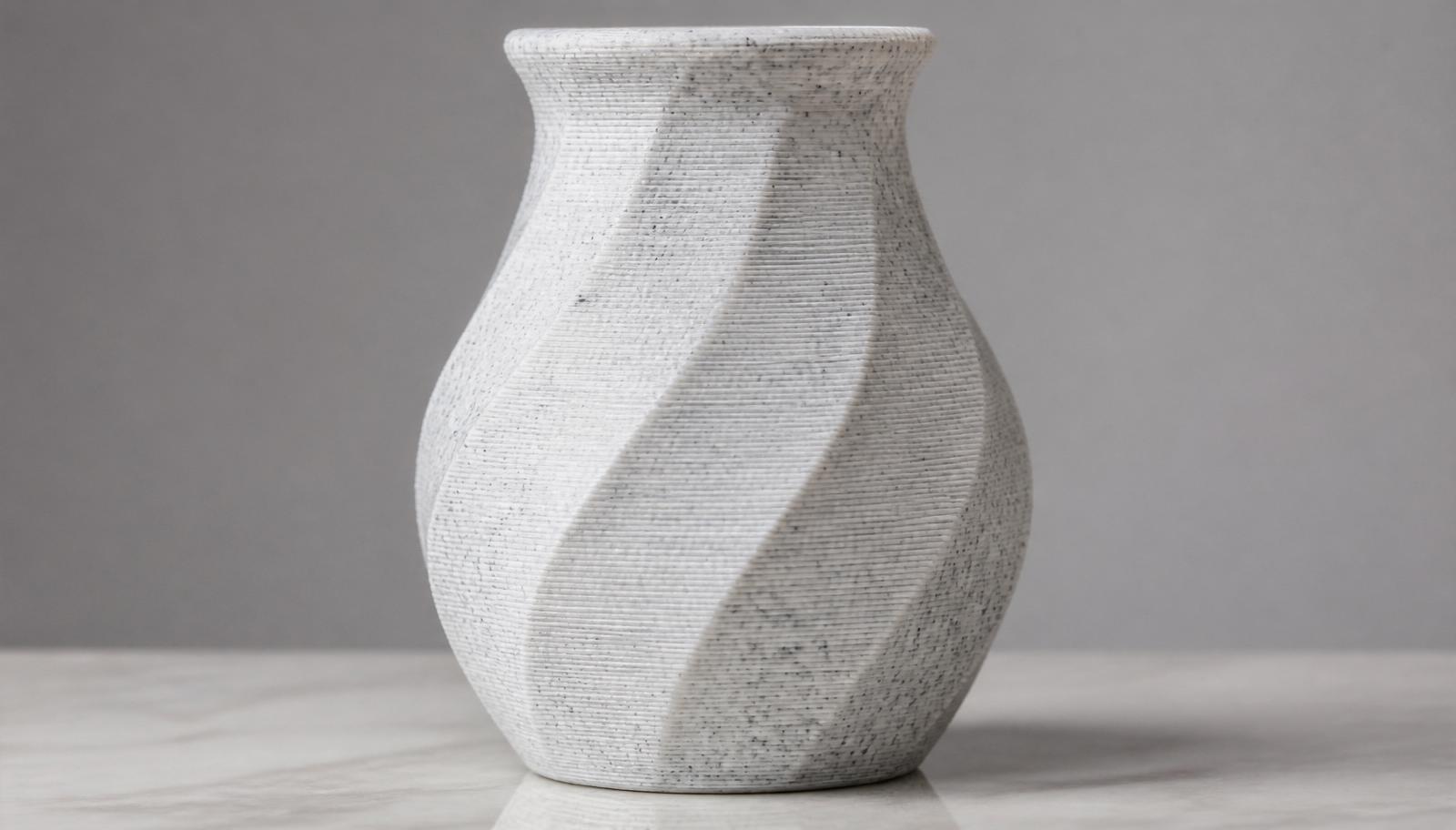
Marble filaments are a specialty group of FDM materials that blend a base polymer (PLA or PETG) with mineral additives, chalk and pigments in shades of grey, black and beige. The result is a print that looks like natural marble or stone — with no sanding, filling or painting.
The main advantage: hiding layer lines
With standard single-color filaments (PLA, PETG, ASA) every layer reads as a clean horizontal line. With marble filaments the veining runs across the layers in irregular, naturally distributed streaks. The eye stops tracking the horizontal layer structure and locks onto the pattern instead — the layer lines are visually broken up and the part looks cast or carved, not printed.
That is why marble filaments are the go-to choice for decorative parts where appearance matters more than mechanical properties: vases, candle holders, gifts, architectural models, sculpture replicas and interior accents.
PLA marble
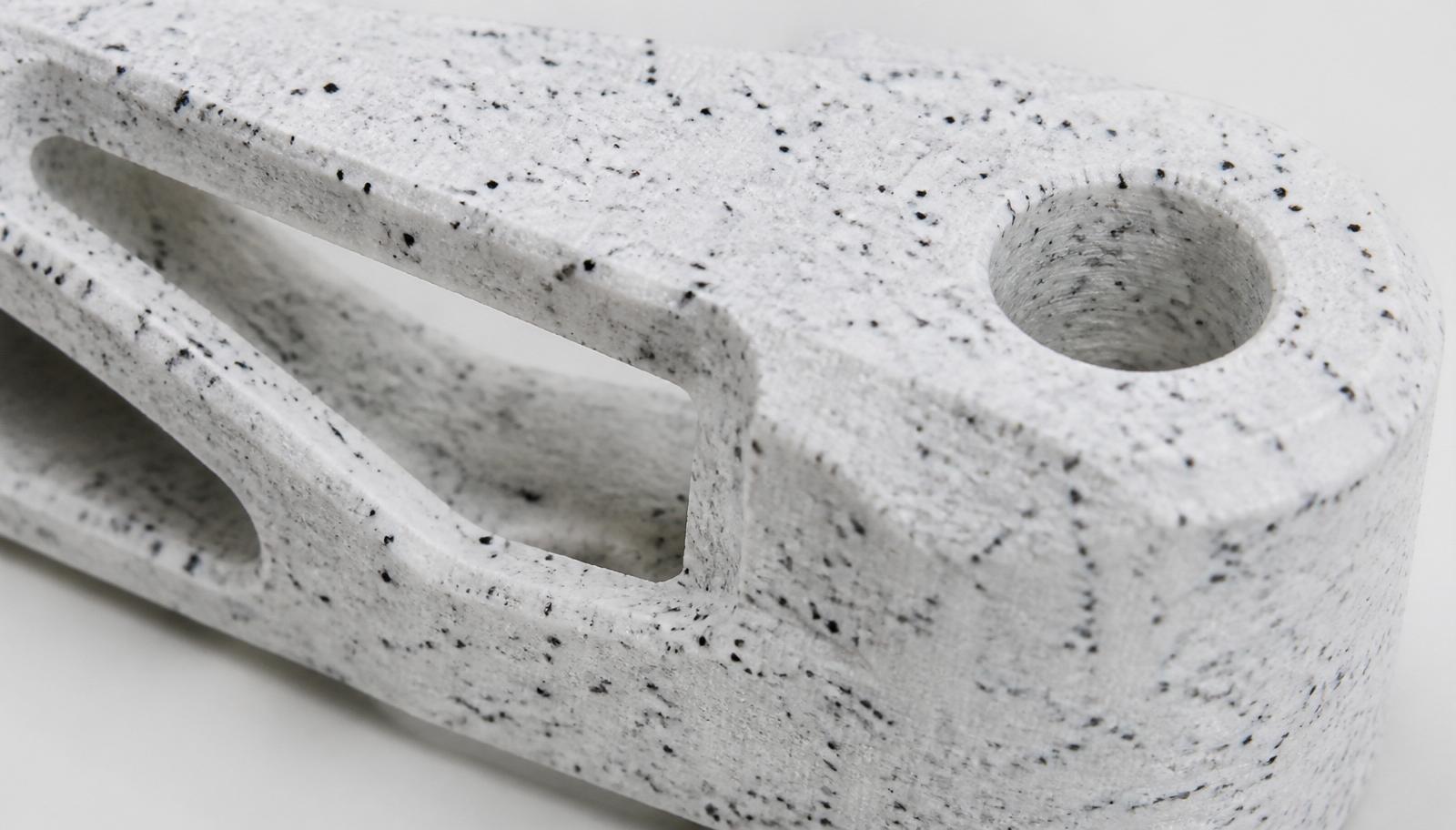
PLA marble is the most common variant — easy to print at 200–220 °C, with a matte, stony finish.
Advantages of PLA marble
- Visual effect: the most pronounced veining and a matte, non-glossy stone look.
- Ease of printing: behaves like standard PLA — no enclosure, no glue, good first layer on a cold bed.
- Cost: only marginally more expensive than plain PLA.
- Detail: excellent reproduction of fine model details and textures.
Drawbacks of PLA marble
- Heat resistance: like regular PLA, softens above 55–60 °C — not for cars or direct sunlight.
- Mineral additives: abrasive — a hardened steel or ruby 0.4 mm nozzle is strongly recommended for regular use.
- Brittleness: stiffer and more brittle than plain PLA — not for load-bearing parts.
- Not for outdoor use: UV and moisture degrade PLA over time.
PETG marble
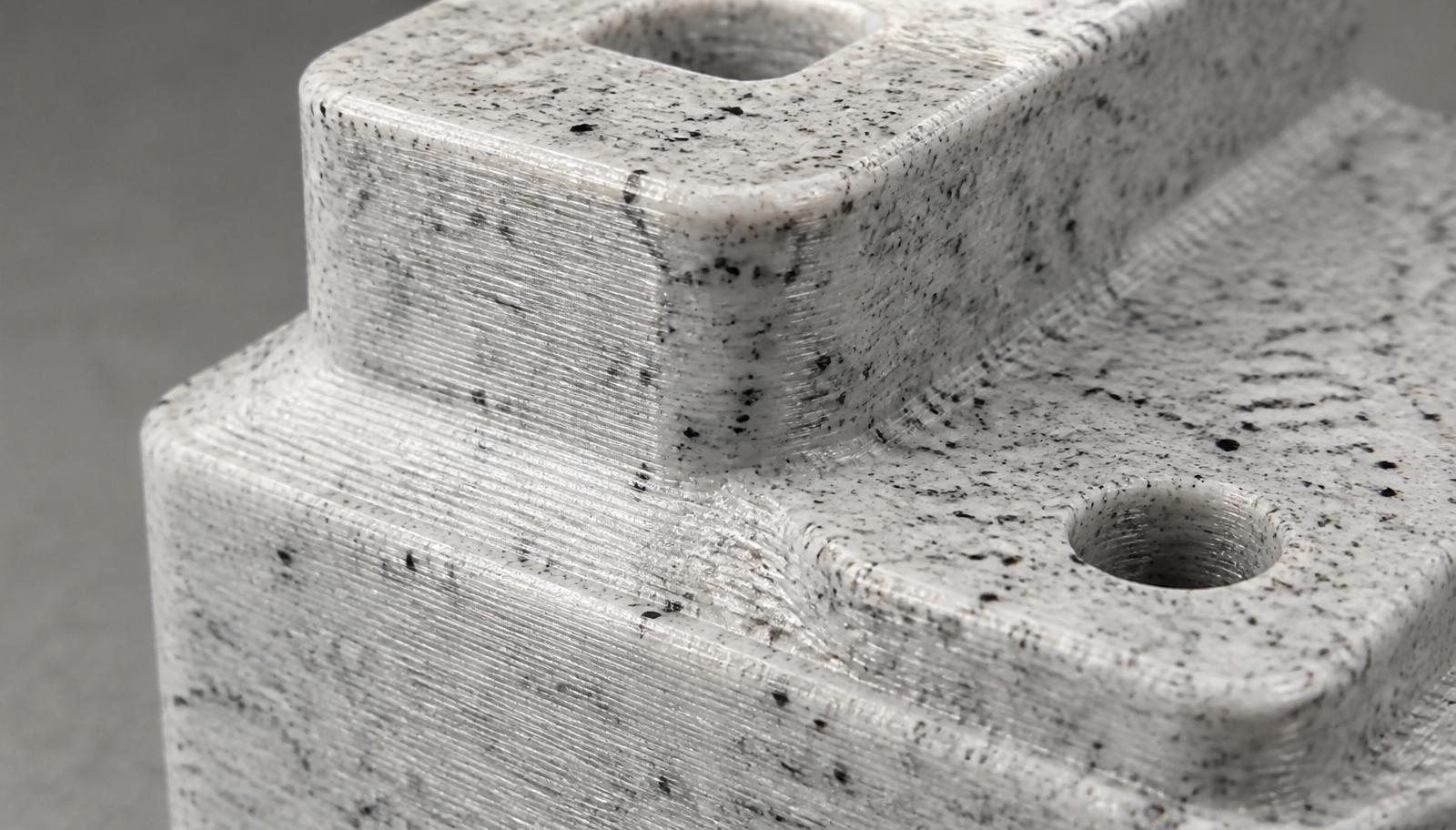
PETG marble combines the marble aesthetic with PETG's better mechanical and thermal performance. Prints at 230–250 °C, bed 70–80 °C.
Advantages of PETG marble
- Heat resistance: stable up to ~75 °C — safer for warmer environments.
- Toughness: less brittle than PLA marble — better impact and bend tolerance.
- Chemical resistance: resistant to moisture, oils and most mild chemicals.
- Semi-gloss finish: subtle sheen and depth — veining reads as being "inside" the material, not just on the surface.
Drawbacks of PETG marble
- Trickier to print: needs higher retraction and more precise flow tuning than PLA — otherwise stringing and visible seams show up.
- More abrasive than PLA marble: hardened steel nozzle is a requirement, not an option.
- Cost: noticeably more expensive than the PLA marble variant.
- Less "raw stone" effect: the sheen makes it look more like polished marble than untreated stone — not always desirable.
When to pick which
- PLA marble: indoor decor, dry vases, gifts, architectural models, sculpture replicas — anywhere authentic stone look and easy printing matter most.
- PETG marble: parts exposed to heat or moisture (soap dishes, planters, bathroom items), pieces handled often, shaded outdoor use.
Practical print tips
- 0.4 mm hardened steel or ruby nozzle — mineral additives wear brass fast.
- Layer height 0.20–0.28 mm — thicker layers exaggerate the marble effect.
- Vase / spiralize mode for single-wall decorations — the veining looks best when there are no seams to break it.
- Drying — PETG marble at 65 °C / 6 h before printing; PLA marble at 45 °C / 6 h.
Whenever the part serves a visible, decorative purpose and you want a finished product straight off the printer — marble filaments are the fastest path from 3D model to final look, with zero post-processing steps.