
PA6-CF: carbon fiber nylon for engineering-grade FDM printing
PA6-CF (Nylon PA6 reinforced with carbon fiber) is one of the strongest materials for FDM 3D printing. A full overview of properties, applications and printing tips — using filament from Crofil3D.
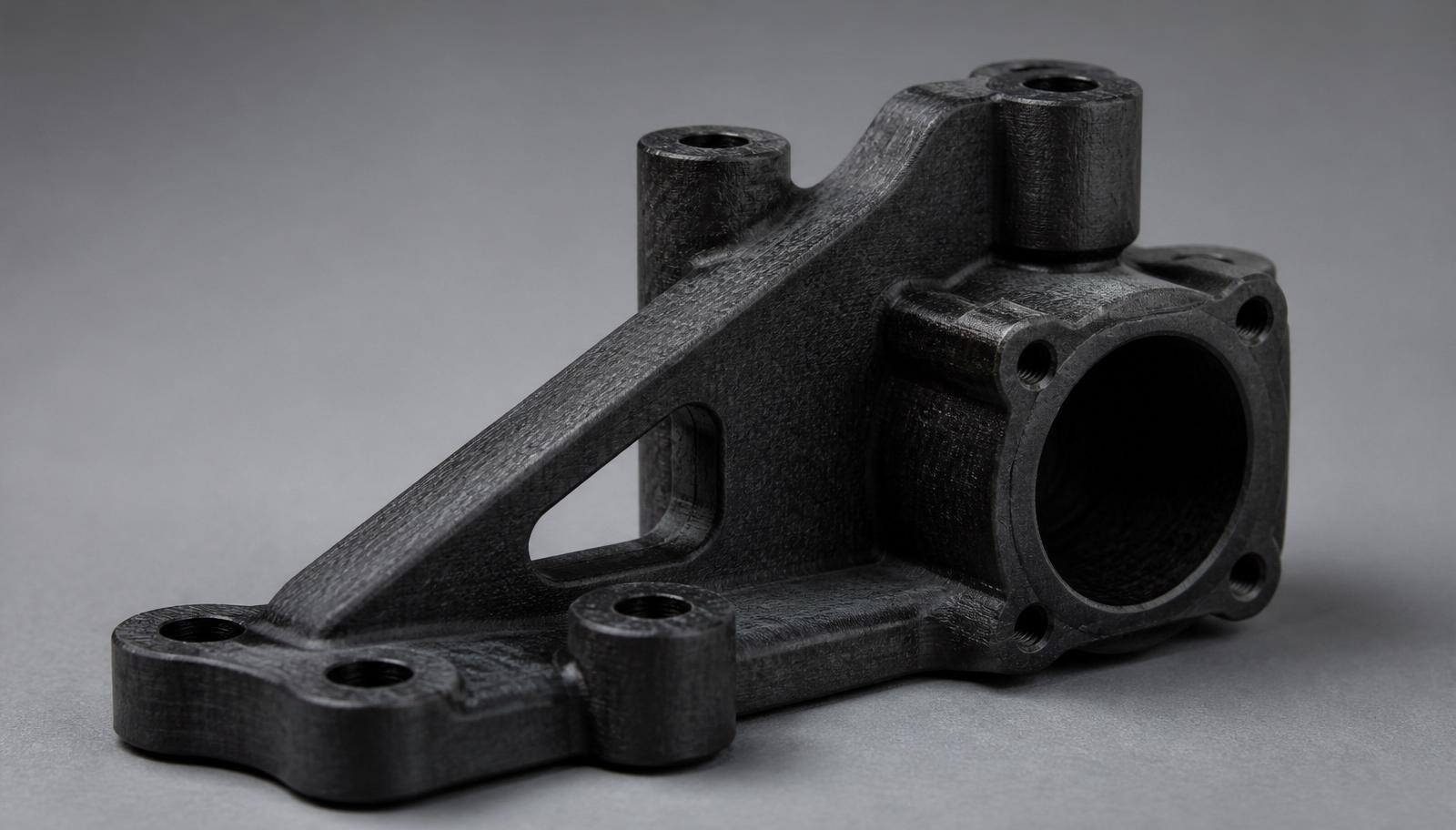
When standard PLA, PETG or ABS are no longer enough — when a part has to survive load, heat and vibration — composite materials take over. PA6-CF is nylon 6 (polyamide 6) reinforced with chopped carbon fibers, and it is one of the most serious engineering materials available for FDM 3D printing.
At 3D4U we print PA6-CF using filament from Croatian manufacturer [Crofil3D](https://crofil3d.com/pa6-cf/) — a top-quality domestic filament made specifically for functional, load-bearing parts.
What PA6-CF is
PA6-CF is a composite where a polyamide 6 (nylon 6) matrix carries roughly 15–20% chopped carbon fibers. During extrusion the fibers orient along the print direction and dramatically increase stiffness, dimensional stability and heat resistance of the finished part — while reducing weight at the same time.
Key properties
- Tensile strength: ~90–110 MPa (several times higher than PLA/PETG)
- Young's modulus: ~6,500–8,000 MPa — very stiff, minimal deformation under load
- Heat deflection temperature (HDT): ~140–180 °C
- Density: ~1.14 g/cm³ — lighter than most metals while keeping structural strength
- Wear resistance: excellent, carbon fibers act as a self-lubricating additive
- Chemical resistance: good against oils, lubricants and many solvents
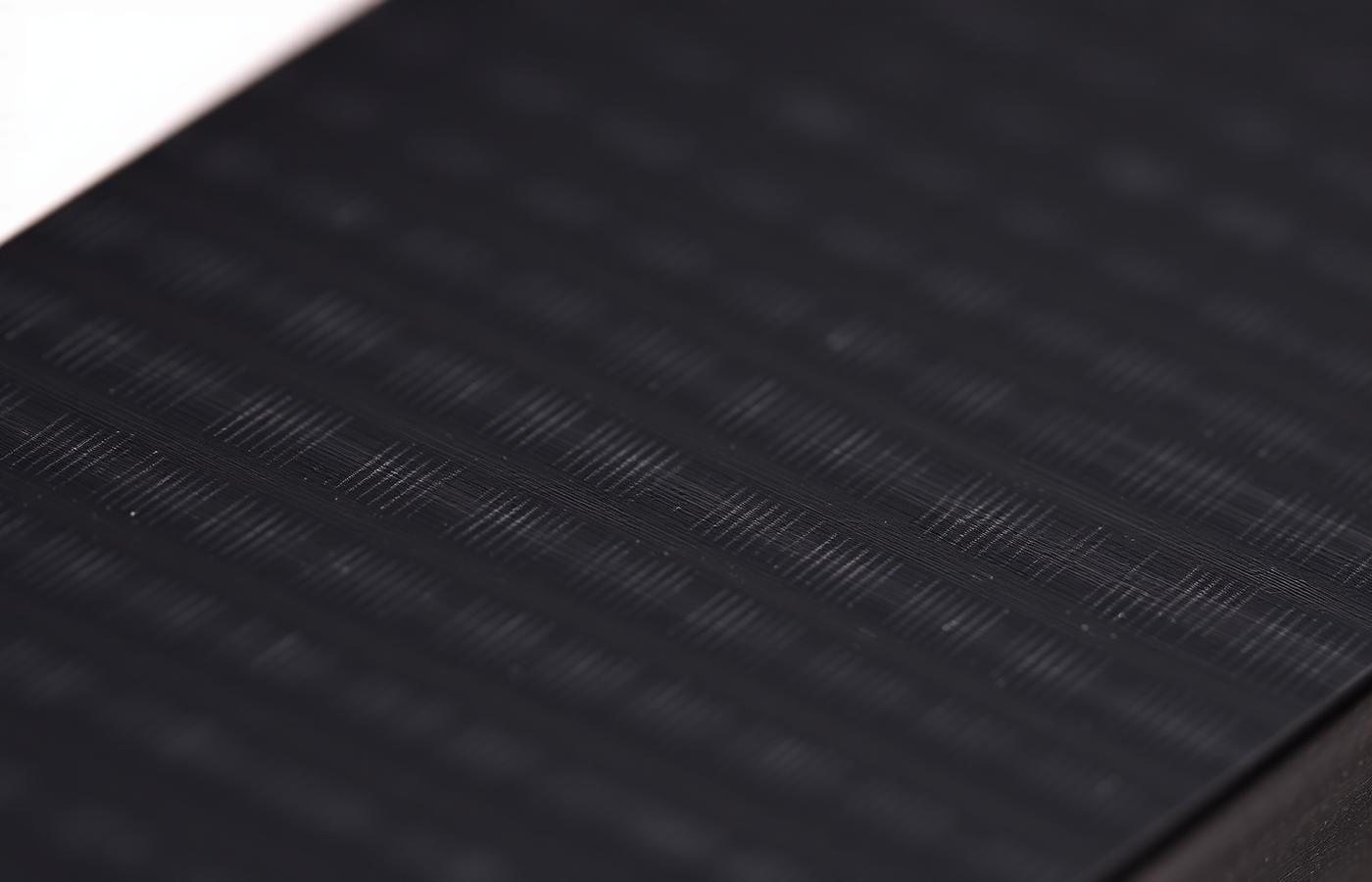
- Color and finish: deep matte black with a visible carbon texture
Advantages
Exceptional strength and stiffness. Parts stay dimensionally stable under load and do not creep like plain nylon.
Low weight. Ideal where strength-to-weight ratio matters — brackets, housings, moving parts.
Dimensional stability. Carbon fibers reduce nylon's shrinkage during cooling, so finished parts are more accurate than pure PA6.
Heat resistance. Works reliably where PLA and PETG give up long ago — near motors, electronics, or in hot environments.
Professional appearance. The matte black finish with carbon texture looks like an engineering component, not a "3D print".
Drawbacks and limitations
Hygroscopic. Nylon absorbs moisture from the air. PA6-CF must be perfectly dry before printing — otherwise you get weak parts, blisters and poor surface finish. At 3D4U we run controlled filament dryers before and during every print.
Abrasive. Carbon fibers wear out standard brass nozzles fast. Hardened steel or ruby-tipped nozzles are mandatory.
Printer requirements. A heated chamber or at least a stable ambient temperature is required, together with 270–290 °C nozzle and 80–100 °C bed.
Cost. More expensive than standard filaments — but when a part replaces a metal or injection-molded component, the overall project cost is usually still low.
Not for transparent detail or aesthetically smooth surfaces — the carbon texture is always visible.
When to choose PA6-CF
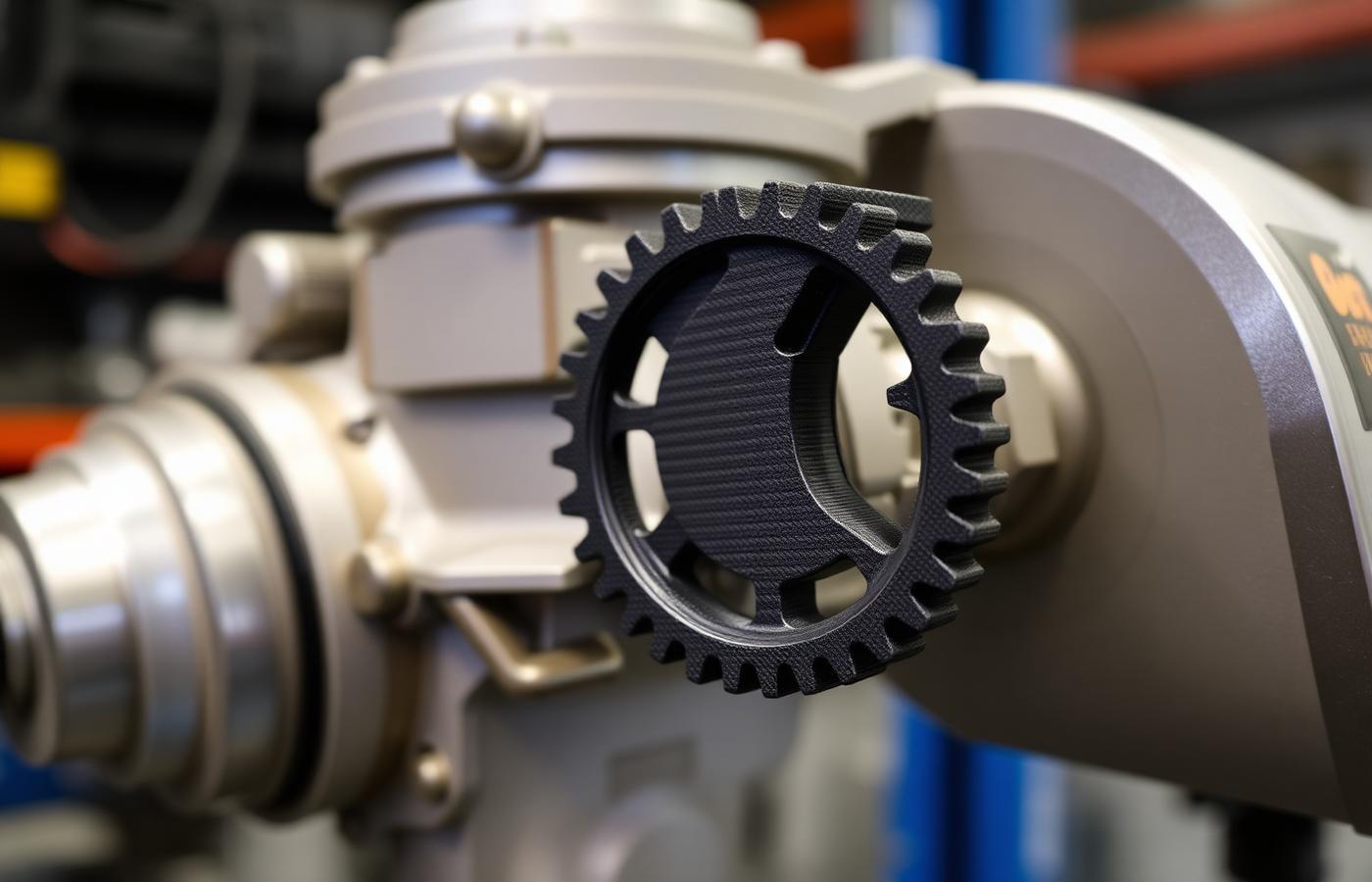
PA6-CF is the right pick when:
- the part replaces an aluminum or steel component in small-series production
- you need brackets, tool holders, jigs and fixtures for the workshop
- you build parts for drones, RC models, robotics or automotive prototypes
- gears, rollers and sliding elements need wear resistance
- electronic enclosures must survive elevated temperatures
For decorative parts, form-check prototypes or toys — PLA or PETG is enough. PA6-CF is reserved for cases where regular filament would simply snap.
Why Crofil3D
Crofil3D is a Croatian filament manufacturer producing PA6-CF with consistent diameter, uniform fiber content and stable mechanical properties from spool to spool. The quality matches imported European composites while offering significantly faster delivery and direct manufacturer support — a real advantage for professional production based in Croatia.
How to order
If you have a part that needs carbon-reinforced nylon — send us an STL or a description of the application. We will recommend the optimal wall thickness, print orientation and infill so that the carbon fibers work along the actual load direction, and deliver a component that both looks and performs like real engineering hardware.