
PETG or ASA/ABS — how to choose the right filament?
When to pick tough, easy-printing PETG and when to reach for UV-resistant ASA or classic ABS? A quick guide to the strengths, weaknesses and typical uses of each material.
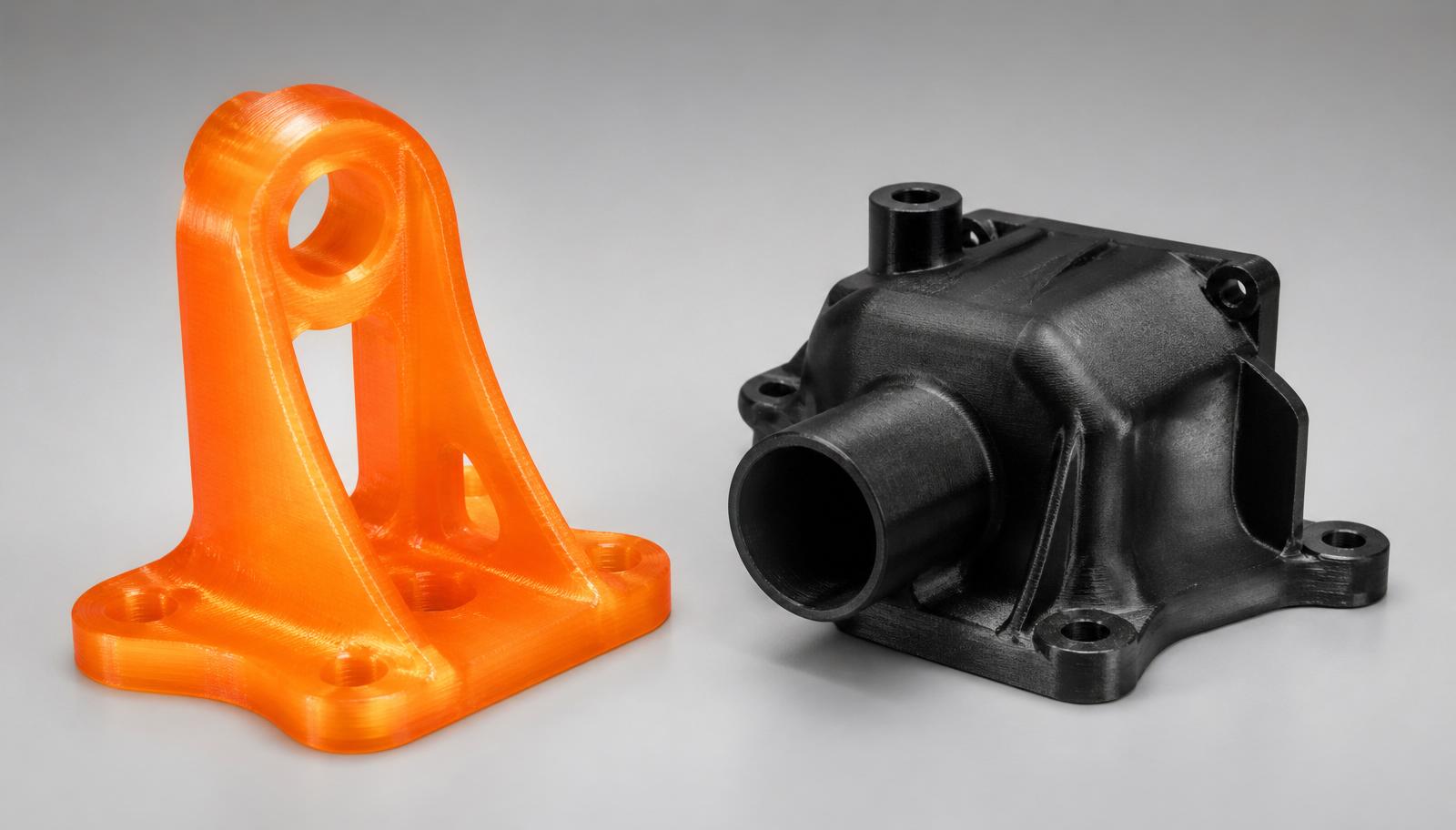
In FDM 3D printing, the choice of material often matters more than the choice of printer. PETG and ASA/ABS are the three most common "engineering" filaments we run at 3D4U, and each one solves a different problem. Here is a short guide to help you decide which one fits your project.
PETG — the versatile workhorse
PETG (polyethylene terephthalate glycol) is one of the most widely used FDM filaments today. It prints easily, barely shrinks and produces parts that are strong but slightly flexible — they resist impact instead of shattering.
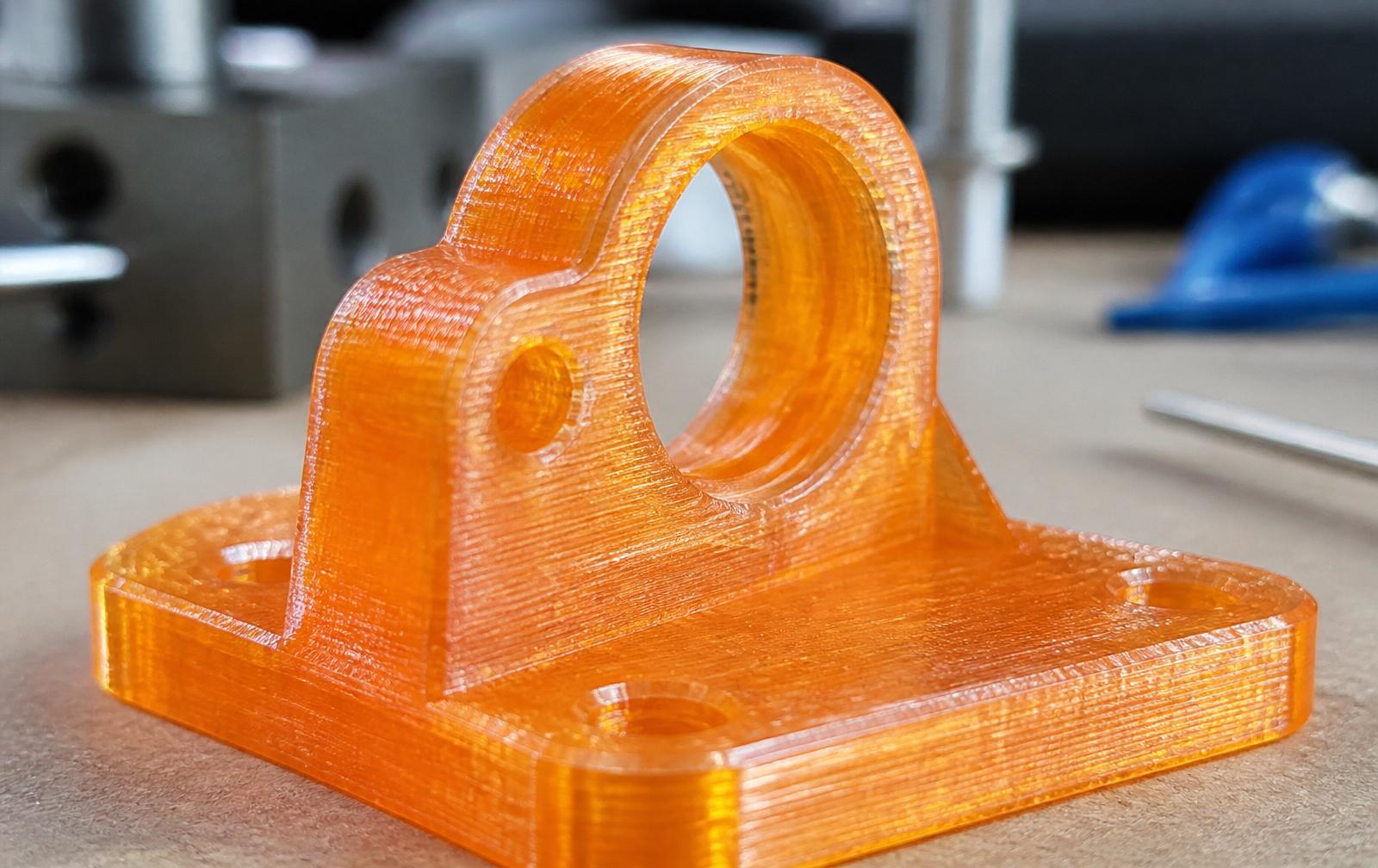
PETG advantages:
- Excellent layer adhesion — tough, impact-resistant parts.
- Chemical resistance to water, mild acids and many solvents.
- Food-safe grades and good optical clarity are available.
- Low shrinkage — great for larger functional parts and enclosures.
- Easy to print on open printers, no enclosed chamber required.
PETG drawbacks:
- Softens around 70–80 °C — not for hot environments (e.g. a car in the sun).
- Only moderate UV resistance — yellows and weakens outdoors over the long term.
- Prone to stringing if the profile is not well tuned.
- Harder to sand and paint than ABS.
When to choose PETG: functional prototypes, brackets, electronics enclosures, containers, indoor mechanical parts, anything that needs to be tough and safe against impacts.
ASA and ABS — for outdoor and higher-temperature use
ABS is the classic engineering plastic behind many automotive and industrial components. ASA is its "outdoor" sibling — chemically very similar but with dramatically better UV resistance, so it does not degrade in sunlight.
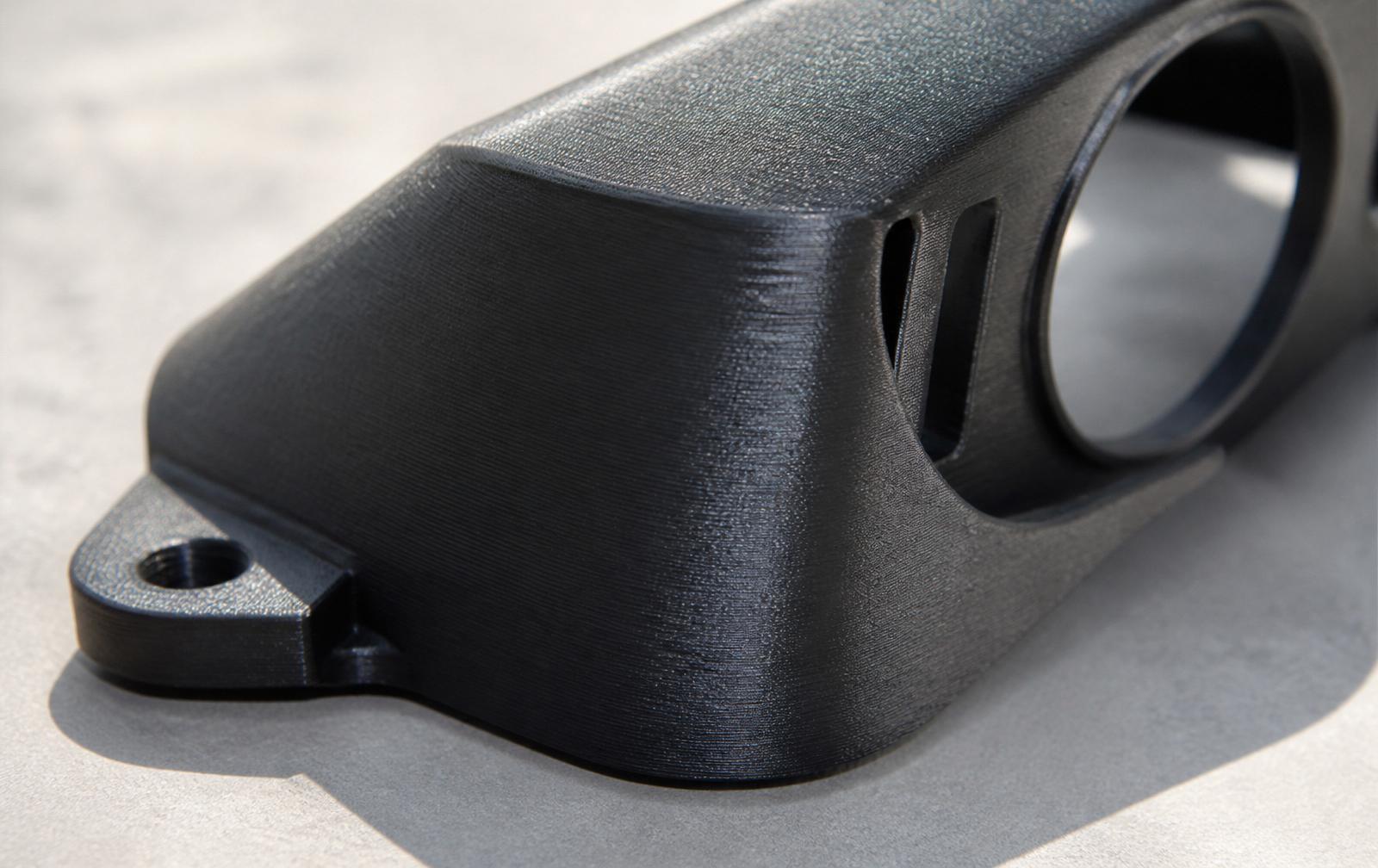
ASA/ABS advantages:
- Higher heat resistance (around 95–100 °C) — survives hot summer days in a car and proximity to heat sources.
- ASA offers excellent UV and weather resistance — ideal for parts exposed to sun, rain and frost for years.
- Great post-processing: sanding, painting, acetone smoothing (ABS) for glossy finishes.
- Good dimensional stability under machining (drilling, tapping threads).
ASA/ABS drawbacks:
- Require an enclosed chamber and heated bed — otherwise parts warp and delaminate.
- Stronger fumes during printing; ventilation or filtered enclosure is recommended.
- Stiffer than PETG — more prone to cracking under sudden impact.
- Slightly more expensive and slower to print due to higher temperatures and careful cooling.
When to choose ASA: outdoor parts (sensor housings, solar mounts, car accessories, signage) — anything exposed to sun and weather. When to choose ABS: parts that will be heavily post-processed, painted or acetone-smoothed, indoor automotive and industrial prototypes.
Quick real-world comparison
- Indoor parts, fast iteration → PETG. Cost-effective, impact-resistant, easy to print.
- Outdoor parts in the sun → ASA. UV-resistant, heat-stable, long-lasting.
- Parts that will be finished and painted → ABS. Smooth final surface with modest effort.
If you are not sure what fits your project, send us a sketch or 3D model — at 3D4U we will suggest the material and technology with the best balance of durability, appearance and cost for your specific case.