
TPU for FDM 3D printing — Shore hardness, pros and cons of flexible filament
Flexible filament is not just "rubbery PLA". We break down the Shore hardness scale, which TPU grades are available for FDM printing, and when to pick a softer or harder material.
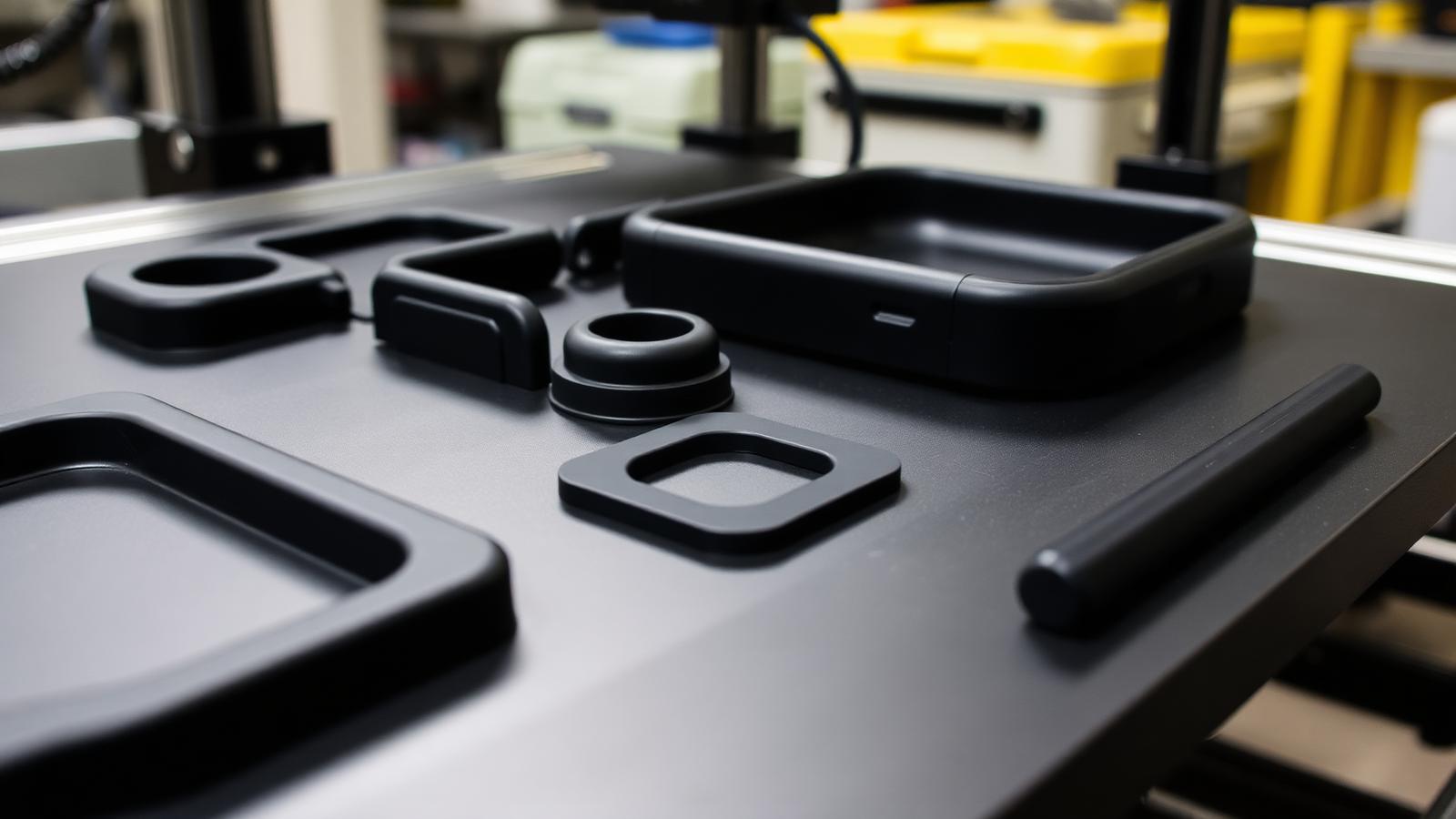
TPU (thermoplastic polyurethane) is the most popular flexible material in FDM 3D printing. Unlike rigid filaments such as PLA, PETG or ABS, printed TPU parts bend, stretch and return to their original shape — enabling a whole range of applications that simply are not possible with rigid materials.
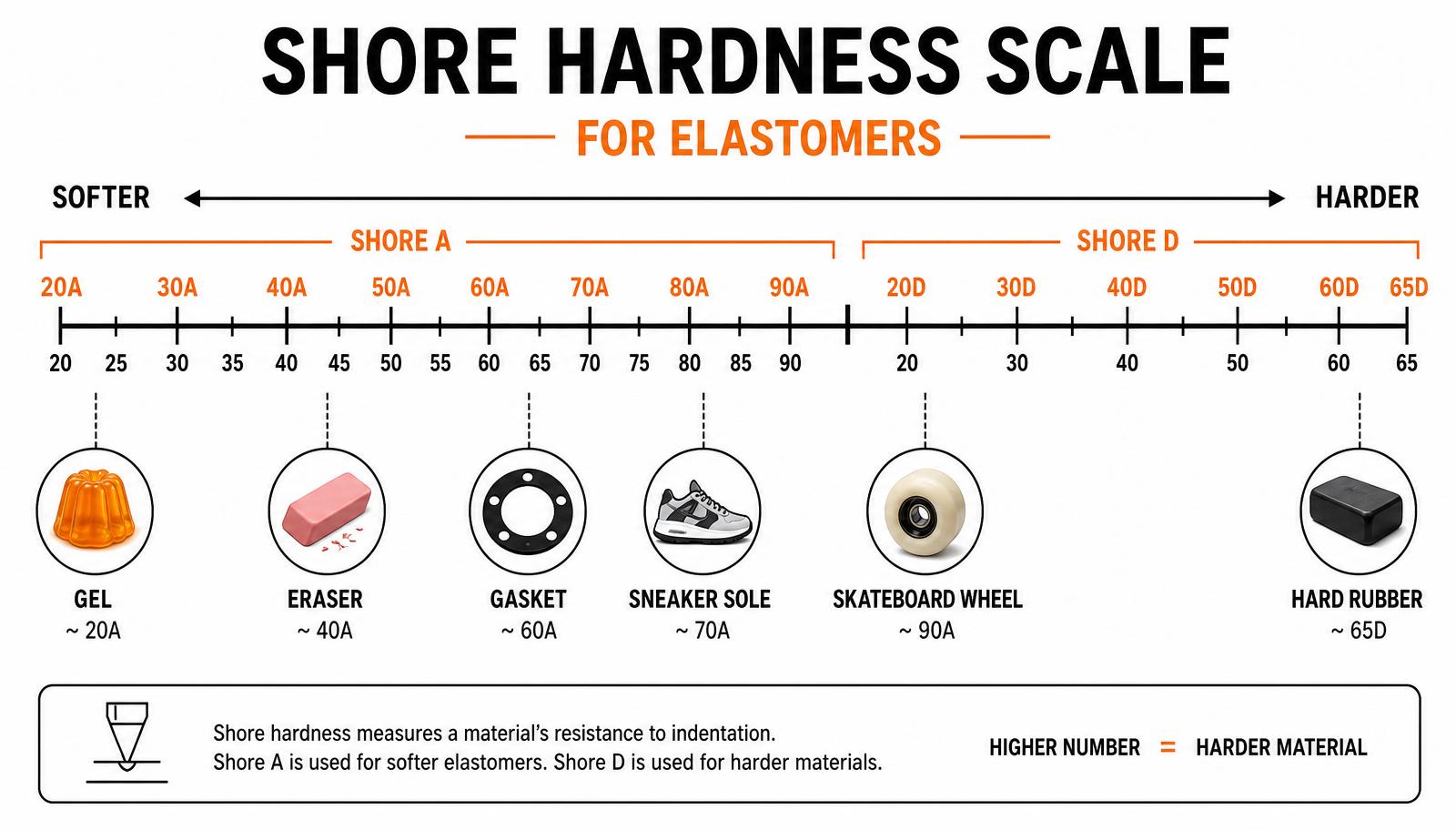
THE SHORE SCALE — WHAT DOES HARDNESS ACTUALLY MEAN?
Shore hardness is a standardized measure of a material's resistance to indentation. For flexible materials, two scales are used:
- Shore A — for soft elastomers (from an eraser to a hard rubber shoe sole)
- Shore D — for harder plastics and hard elastomers
Both scales run from 0 to 100 — higher number, harder material. Some reference points:
- Shore 20A — very soft, like a gel insole
- Shore 40A — like a pencil eraser
- Shore 60A — like an automotive gasket
- Shore 85A — like a sneaker sole (most common TPU for FDM)
- Shore 95A — like a skateboard wheel
- Shore 98A / 55D — like hard industrial rubber
- Shore 65D — essentially a rigid plastic with a little flex
The two scales overlap around 95A / 45D.
TPU GRADES AVAILABLE FOR FDM 3D PRINTING
In practice, desktop FDM users typically find these grades on the market:
1. TPU 60A–70A — Very soft, almost silicone-like feel. Difficult to print (needs a direct-drive extruder, slow speeds, often 15–20 mm/s). Used for gaskets, cushions, wearable prototypes.
2. TPU 85A — The FDM standard. Every major brand (Polymaker PolyFlex, NinjaTek NinjaFlex, Bambu TPU 85A, SUNLU, eSUN) offers this hardness. A balance between flexibility and printability — can run on Bowden setups with careful tuning.
3. TPU 95A — The easiest to print. Behaves almost like a softer PETG while keeping flexibility. Best choice for phone cases, protective sleeves, tool handles, and functional parts that need to dampen vibration.
4. TPU 98A / TPE-D grades (~55D–65D) — "Semi-flex". Prints almost like PETG, but the finished part has much better impact resistance and can flex slightly. Great for load-bearing parts that must not shatter.
ADVANTAGES OF TPU
- Impact resistance — practically unbreakable, absorbs energy
- Wear and abrasion resistance — better than most rigid filaments
- Chemical resistance — tolerates oils, greases, many solvents
- Elasticity — returns to shape even after significant stretching
- Excellent bed adhesion (sometimes too excellent)
- Working temperature from -30 °C to ~80 °C depending on grade
DRAWBACKS AND PRINTING PITFALLS
- Slow printing — 20 to 40 mm/s for softer grades, up to 60 mm/s for 95A
- Direct-drive extruder is almost mandatory below 90A. Bowden setups can handle 95A and harder, but are prone to tube kinking.
- Very sensitive to moisture — TPU absorbs water from the air aggressively. Wet filament produces bubbles, popping in the hotend and poor surface finish. Drying for 6–8 h at 50 °C before printing is recommended.
- Stringing and oozing are more common than with PLA — tune retractions carefully (short, fast) or use coasting.
- Not suitable for small, sharp details — the soft material rounds every edge.
- Post-processing is harder — sanding smears the surface, gluing requires specific adhesives (cyanoacrylate works for some grades, contact adhesives are better).
- Price is 2–3x higher than standard PLA.
WHEN DOES TPU MAKE SENSE?
Choose TPU when the final part must bend, absorb impact, seal or be worn on the body. For everything else — structural parts, enclosures, tooling — rigid materials give a better balance of cost, print speed and finishing options.
If you are not sure which hardness to pick for your project, get in touch — we work with several TPU grades in the workshop and can suggest the best option before you order material.